




Deniss Vasiļjevs: "I want to add value to every place I go"
April 7, 2026
By Reut Golinsky
Photo © International Skating Union (ISU), Reut Golinsky, Eva Maria Jangbro (EMJO)
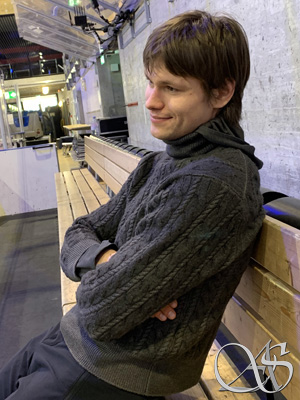 Some would say putting tags and giving nicknames to people is wrong, and we agree, it can be one-dimensional and overly simplistic. So when we keep calling Deniss "the Philosopher of the Skating World," we mean it with sympathy, affection, and a bit of a joke. But it's also true that when you get relatively unlimited - unlike in the mixed zone - time to talk to him, the conversation quickly takes a deep, philosophical turn.
We caught up with Deniss during the "Music on Ice" shows at the end of February and discussed the complicated season he had. The many thoughts and mixed emotions still need time to be analyzed and organized, he says. But maybe talking through them was a first step in that direction.
First of all, how are you feeling? How is your health right now? I understand that in Milan you weren't in good shape.
Yes, in Milan I was more horizontal than vertical, but I'm doing better now, feeling better. Today is the third day of the show, so I'm a little tired, but I'm quite excited and happy to be here. There is a certain relief after such a tense Olympic period. Overall, I think I'm better than when I started this year, and I'm quite happy about that.
The situation with my injury is always complex to explain. I did get the medical, let's call it a "mechanical" fix, but my movement still needs improvement, and the compensation has to be eliminated. So it's a matter of relearning how to use my body correctly because I had the pain for far too long. Even though the immediate pain is gone, I'm still not out of the woods. The diligent work is necessary and will continue for quite some time.
The physiotherapist who worked with me before Europeans is really capable and competent. He was helping me a lot by directing how I can keep working on myself. There were specific techniques he taught me that I'm religiously applying, and I stay mindful of the work. For example, today, being tired from two days of shows, I need to be very vigilant, because we only have one body.
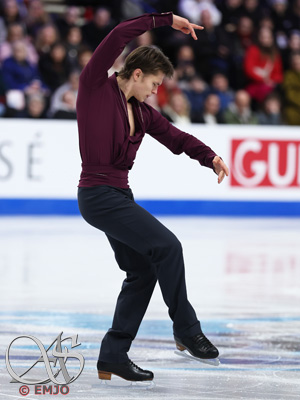 Looking back at your three Olympic Games, how would you describe each one? Any special feelings, thoughts, aftertaste, or memories?
Well, they were very different in spirit. I would say the PyeongChang Games were, without a doubt, the most about Olympic culture, values, and experience. They became my baseline, setting a very high standard of excellence.
The Games in Beijing were very special because of the timing and context as they took place in the midst of COVID. It was a peculiar season, and the way the competitions were held, along with the global situation, made it quite a crazy time.
Then we have the Milano-Cortina Games, which were once again a completely different experience. Somehow, the scale and intensity were very different from what I experienced in PyeongChang. The scale was much bigger in South Korea - you were right in the middle of it. It was this massive scale where you could really feel the power of the sport and its influence. Milano-Cortina didn't quite reach that level. Also, when I think about Italy, I think of their incredible food, the culture, the whole experience. So, for me personally, the food in the village was underwhelming by Italian standards. But, yes, I was also really sick, which influenced my experience a lot. It was far from ideal, but still a very valuable experience.
This time felt very different also because I've grown up and had different objectives. But overall, it's interesting to see my evolution as a person over these years, to see how sport influenced and shaped me. So it was very interesting to observe, for me personally.
When I think about the Olympics, I don't just think about the event itself, but about my journey - the amount of effort that went into it, and the feeling of finally getting there. I think about the four years and reflect on many things. Regarding these Games, the last four years were quite remarkable. It was an impressive step up from the previous four years and the time before that. 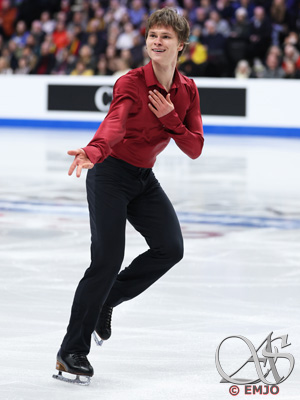 So, I am very proud and quite happy. This season was insane. I'm proud I was able to get there and do what I did. I had the advantage of being in this sport for many years, and in my opinion, without that experience it could have gone very differently. I'm happy to recognize that all the work paid off.
Figure skating is a very intensive sport that requires a certain culture, but also sufficient financial and intellectual capital and capabilities. I have been in this sport for twenty-three years, ten of which as a senior skater. And this year, I learned the very tough reality of the economics of this sport, which probably happened also because I haven't always made economically viable choices. Other sports also require high investment, but the return is tenfold. Here, you're a survivor - you're just getting by, always stressed about how to manage and afford it all. It's insane how much is required to continue in this sport, and we haven't even tapped into some of the resources that come with nurturing the right mindset, programming, attention, and focus.
It will take me years to fully understand, to go through all my journaling and records about this experience, and to learn how this happened. Not just to accept it as "wow, I was lucky, a miracle happened," but to actually make of it something that can be recreated and systematized. Just pushing forward and overriding is not a long-term, sustainable mindset. I need to analyze what happened, learn from it, and improve based on that. If I want to continue skating normally, I have a huge amount of work ahead of me. In a way, right now I still need to exit this relative state of shock and finish the season first, then do all the quality work required. And also to take responsibility for my life even more.
Wait, you mentioned continuing skating? I thought you haven't really made a decision yet about what's next.
I still haven't! There are so many questions I still need answers to before committing.
 So you need to finish the season, do all that internal work with yourself first, and then come to a conclusion.
Absolutely! You see, that's the thing. It looks like at this point, if I continue, I will indeed be the oldest skater...
And why not? I mean, look at Deanna Stellato!
No, but the requirements are a bit different in singles, especially for men. I'm not going to be there just to be there, the same as coming to the Games as "a tourist" was unacceptable to me. That's why, with all the difficulties, the way I arrived there, and what I did, I have insane pride as an Olympian because I managed to push through.
I treat figure skating as a journey of self-exploration. It's not just about the sports results. Everything matters. In certain areas of our sport, I see there is still huge room for improvement, and I want to offer my experience. I feel figure skating has enormous potential for evolution and growth. In my opinion, we are underperforming to such an extent that the only way forward is way better.
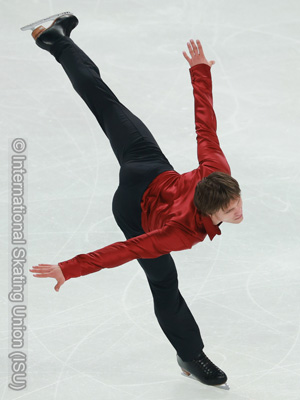
What exists now is only a fraction of what it used to be. And figure skating is arguably one of the hardest sports, if only because you have to make it look effortless. We're probably fitter than the average hockey player. The level of skill and execution required in this sport is incredibly high. A movement that's off by just a few degrees or 0.1 seconds can make the difference between success and total failure. You can't really think when you skate, it's an effort built up over years. And now things have become even more complex. Yet at the same time, I feel that all this effort has been extremely undervalued and underappreciated. We do four rotations in 0.65 seconds! And in the way the sport is structured nowadays, people don't even realize the difference: purely from a physics standpoint, the visual difference between a triple and a quad is less than 10 percent.
That's true, during the Games, people were much more excited about Ilia's backflip than all the quads he did.
Exactly! I can show you on my phone right now how I do the backflip on the floor. I learned it to develop physical and acrobatic ability. But personally, I feel that doing a backflip on the ice isn't exactly figure skating. 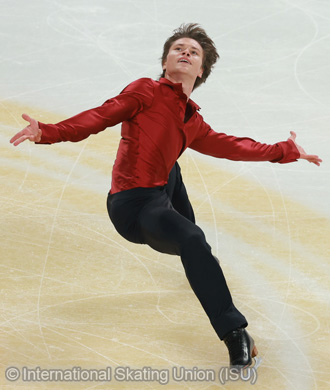 My point is that figure skating takes years of work behind every element, while I had my backflip ready after just two months of training, just because the main requirement of our sport is to be extremely fit.
When I see skaters coming onto the ice completely terrified because they might lose points for every mistake, I think, "We try not to lose points, how about we try to gain points?" If I'm putting in so much effort and focus, I'm not doing it to be terrified at the moment. I have to celebrate and be happy with how far I've come. Otherwise, it defeats the whole purpose of doing all this.
In many ways, this season has shattered so many beliefs I had constructed in order to be who I am. I'll have to do a massive amount of work to get to the bottom of it all, of what makes me, me. And the more I dig, the more questions I have. It matters so much to me. Do I have meaning, purpose, an understanding of why I do it?
The choice of programs this season was the same. None of it is just out of the blue. All of it has some sort of meaning or representation that allows me to deliver it in certain ways. As I keep saying, I'm an authentic mess. And that's because I am. I'm often quite confused, always searching for an explanation, a reason, and at the same time the picture - the puzzle - is so messy. I wish there were clarity and direct answers...
Deniss, but it's called life and it's called growing up. It's a process, it's always messy, and it happens to everyone.
Absolutely. That's why I love mathematics. It's all clean and the machine works. That's why I'm such a big formula follower. And that's what I learned from stoicism. The philosophy matters a lot because I don't accept that life is a mess and that you just accept it and do nothing about it.
I need a purpose. This season, I skated for the Olympics and for the people. I'm going to Worlds because I can, and because I want to give something back to the people. 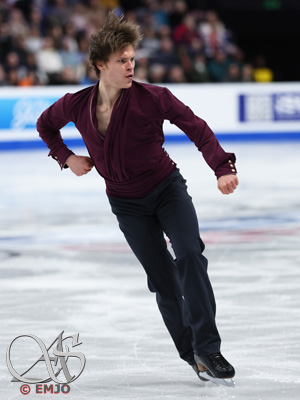 My scarves were non-profit because it matters so much to me to be grateful and to show that I deeply care about the people who have been following me for years. That's my whole story. This is what I'll take with me, what will support me in whatever I choose to do next and whenever I choose to do it. But this chapter doesn't feel finished yet - somehow I'm still waiting for the feeling of 'yes, this is it.'
But it's good that you don't have that feeling yet. I mean, at least for me, for us
You know, I was basically this close to finishing after Beijing... When I read my journals, my thoughts from that time - because that's what I did after the Games, I went back to get as much as I could - I struggled to understand myself.
I love reading about basic concepts in psychology, understanding mental frameworks and what it means to be an athlete. I'll probably spend years after I retire still processing my skating career. One important thing about it was making progress, which is still important to me now. Even though I didn't do a quad this season, I still went for it during warm-ups. I had to make certain choices to stay true to my values. Figure skating is about performance, emotions, and integrity. I did what was necessary to fulfill what I see the sport should be, what I wish it to be. That's why I wasn't afraid to go for the free skate at the Games, even though it was my fourth full run-through.
Hm, I know you had only one full run-through before Europeans, then at Europeans, and then just two more?
Yes. I couldn't do more because I was either injured or sick. This whole season and the way things happened - it was, no joke, a true miracle. But I'm not someone who says, "Oh guys, if you knew the whole story... please, give me some pity." You have to judge what's in front of you at the present moment. And this mentality, this mindset, helped me somehow manage and achieve such success. I wish I could recreate it. I wish I could share it, to help other athletes. Fundamentally, I want to share this experience and make someone's work easier. Because that's probably the main reason we have athletes with longevity, and there aren't many.
You've recently joined the ISU Environmental Sustainability Working Group. What does that actually mean?
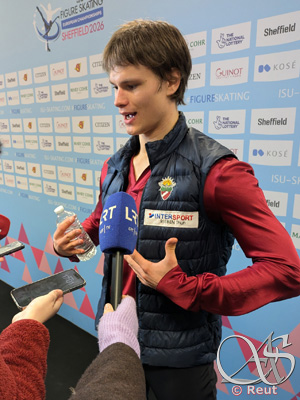 This group was created to address how to improve the efficiency of what we use for the ice. We need changes that will bring more attention to nature, and for me personally, it also means thinking about how to become smarter and more efficient to give the sport longevity.
Ice rinks are very hard to maintain, you need to create a very complex environment around them. And I'm sorry to say that at this point, there isn't an ice rink where I feel comfortable. My favorite ice rink, which comes closest to it, is probably in Oberstdorf.
Not in Champéry?
No, the "Palladium" is too cold. There are plans to reconstruct it now and other things will happen there. But I usually can't be at the ice rink for more than an hour because it's so cold. The moment you come to school and your toes get frozen shows that the system doesn't work. You need efficiency in using energy and thermodynamics, you need to understand the value of heating the place. It all has long-term consequences. I love to be on the ice, but I hate cold so much, I went to great lengths to learn to tolerate it. In the end, I can't be on the ice without constantly moving, and I can't be there for a long period of time. Fundamentally, I hate ice rinks, I'm sorry to say that. It can be so much better, and I want to incentivize change as much as possible.
So when the opportunity arose, I obviously jumped on it because I have things to say. I wanted to share some of my ideas, and they needed the voice of someone who is actually on the ground, they needed my experience.
I wish we will have better quality ice and also a better experience for people who come to watch figure skating.
At the end of the day, we're entertainers, we want to take the audience with us. Input from the crowd, their captivation, should be one of the main things. What happens too often now is that it becomes a following of one person; fans come to watch a particular skater. Very few come to enjoy the whole event, and this is a problem. I want people who are new to this sport and don't know anything to come to the event and enjoy what they see. 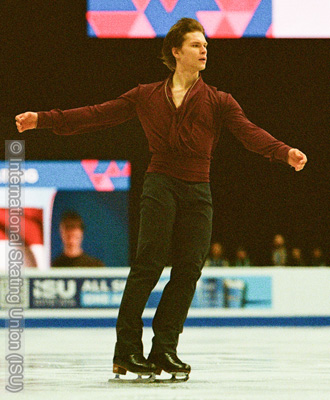 I cannot guarantee the final result, but I can see that there is a massive step forward the moment we start to treat events as existing for those people who sustain us, who bring all the money, who we skate for. We need to bring the emotions and take the audience with us to fulfill their dreams. It's as simple as that: we skate for the people who come to watch us. And it pains me when it doesn't happen. I wouldn't care about the sport if no one needed it. If no one needs this sport, then there is no need to have this sport in the first place. Figure skating has a unique place among Olympic sports, and I wish it was more respected and better taken care of.
I want only the best for figure skating, and I want to bring and share only positive things. I want to add value to every place I go. This is how I was raised and how my grandmother inspired me in many ways. Wherever I go, I want to leave that place better than when I arrived. This is a fundamental principle of my life, and I want to keep living by it.
I have this old-fashioned chivalry and a - maybe a bit too romanticized - way of looking at the world. I want to inspire everyone to become more independent, to have their own opinions, but also to choose cooperation and to do better together. I am a builder. When I'm asked if I'm a warrior which kind of weapon I would choose, I choose a hammer - because you can also build with it.
Personally, I treat every performance the same way I would an Olympic one. It matters to me that when I step out, I give a hundred percent. The process and the mental attitude matter. This season I tried so many things, even though the basic logic said: finish and go home. Just being there is not enough for me. I think I needed this in order to be my best self - I needed it because I love it and because it truly makes me push my limits. This season showed me how limited my mindset actually was and how little I knew. And arguably, I know more than the majority of my peers, at least in certain areas. I bring to the sport things I've never seen anyone else do before. And I still have such a massive amount to discover, understand, and develop. The lesson I learned is that things will never be perfect; just do your best and see where you end up. And from there, keep taking the next right step.
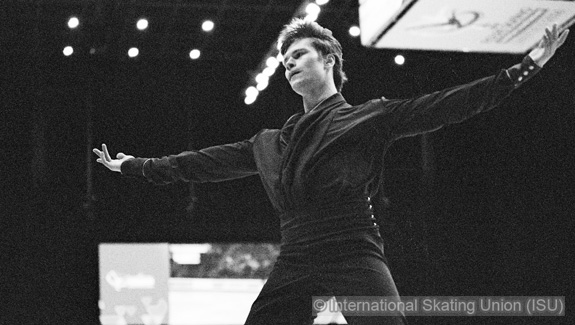
Prague 2026, unfortunately, proved to be among the most difficult competitions Deniss has ever had, and his placement was one of the lowest across all ten World Championships he has participated in.
"I truly enjoyed the performance," he said after his short program, "especially the part of it which was directed at the audience, and I felt them joining me. That is what I take with me, what is dear to me, and the reason I really skate. I want to bring more to this crowd, to people coming to watch us and participating with us during our performance."
Hopefully, even though his free skating didn't go as planned, he holds on to those words - and to the support he received, both in person and through social media, as motivation to keep going. The story certainly doesn't end here.
